


Toward Greater Sustainability in Heavy-Duty Transportation
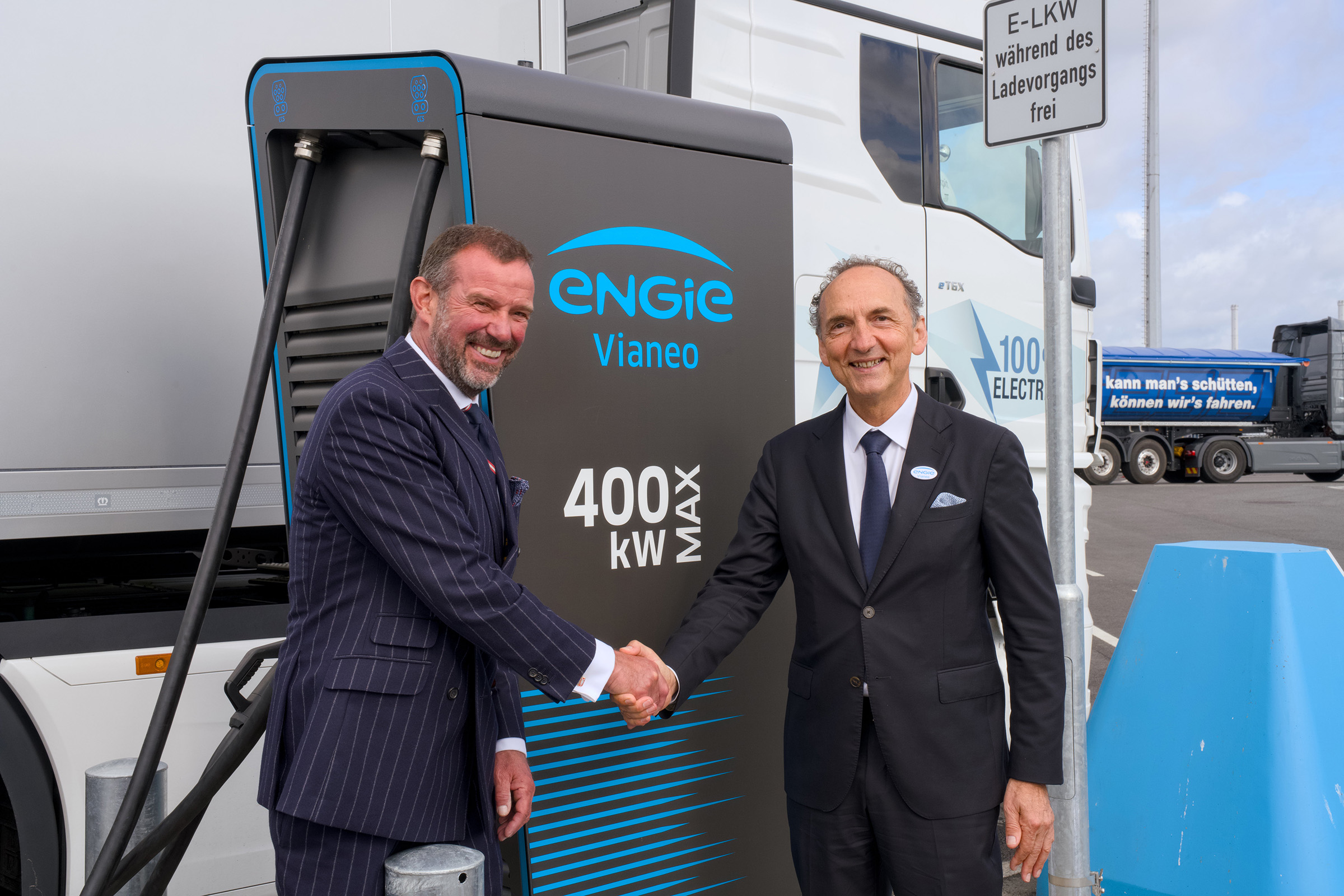
ENGIE Vianeo and PORT OF KIEL Open an EV Charging Station at the Ostuferhafen
- ENGIE Vianeo and the PORT OF KIEL have opened a new truck charging station at the logistics hub at Ostuferhafen, marking a milestone in the decarbonization of road freight transport in northern Germany
- The project is a pioneer in sustainable port logistics in Europe
- At the official opening, representatives from the Schleswig-Holstein state government emphasized the project’s great significance for Kiel as a business hub and, beyond that, for the transportation transition in Germany and Europe
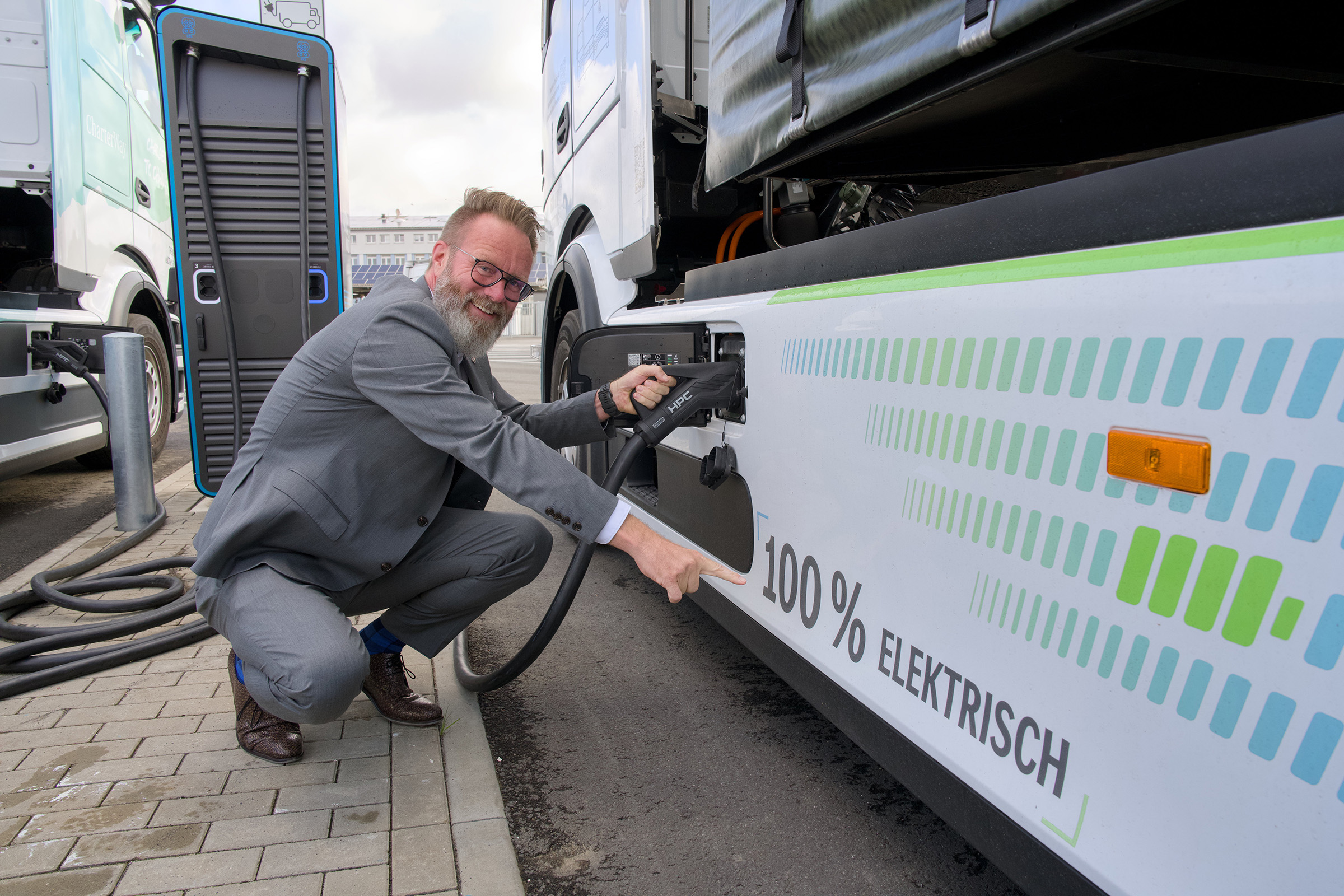
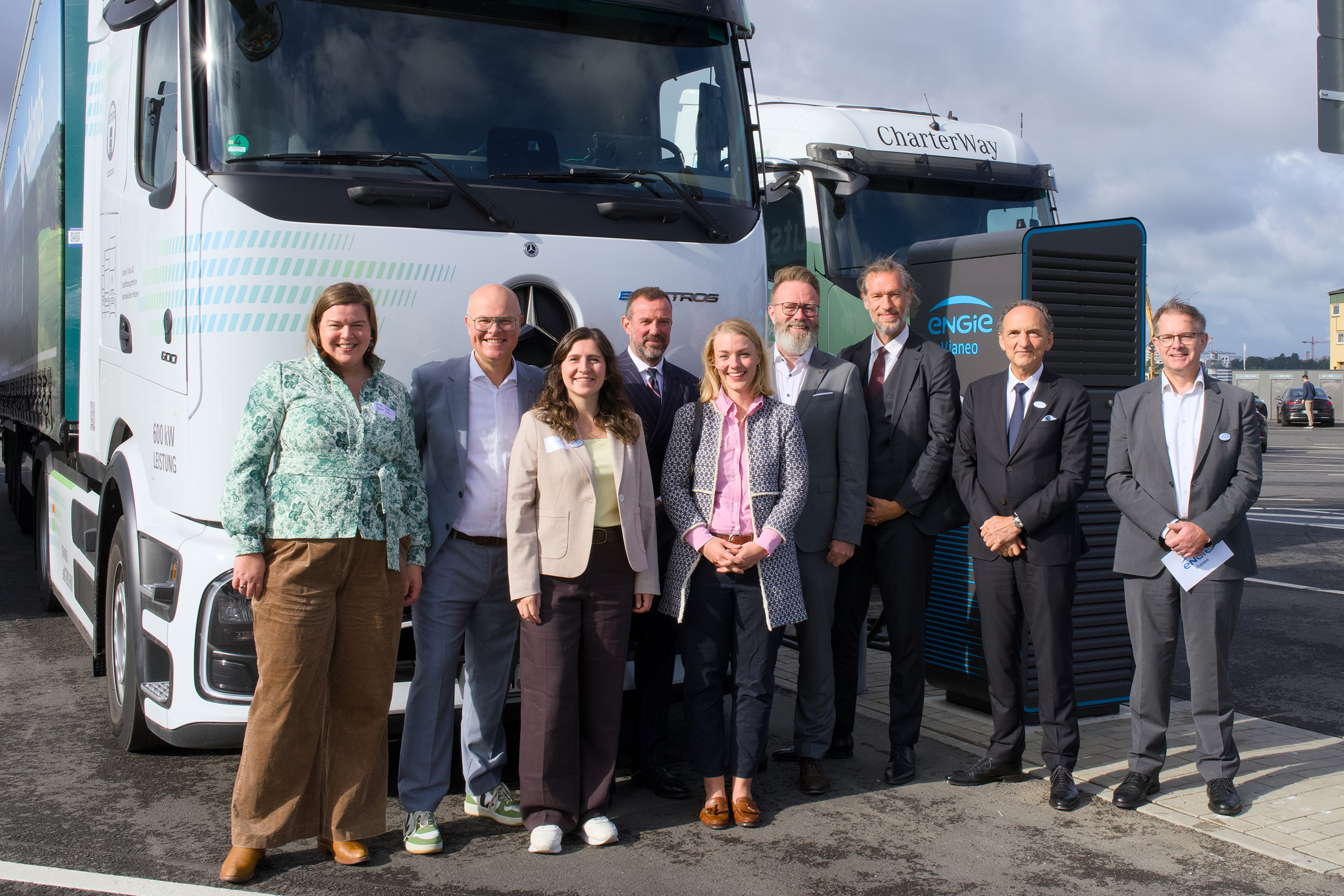
(Kiel, 1. September 2026) Year after year, approximately 180,000 trucks and trailers pass through the Port of Kiel. This makes it one of the busiest ports on the Baltic Sea and a key hub in both the German and European logistics networks—and it is precisely here that ENGIE Vianeo, the ENGIE Group’s subsidiary brand for e-charging infrastructure, and PORT OF KIEL opened a new e-charging park with eight charging points for trucks today, on September 1, 2026, a new electric charging park with eight charging points for trucks. In front of guests from the logistics industry and the political sphere, Claus Ruhe Madsen, Minister of Economic Affairs, Transportation, Labor, Technology, and Tourism for the State of Schleswig-Holstein, and Tobias Goldschmidt, Minister of Energy Transition, Climate Protection, Environment, and Nature for the State of Schleswig-Holstein, emphasized at the official opening the great significance of this pioneering project for Kiel as a business hub as well as for the transportation transition in Germany.
“Europe can only achieve its climate goals if heavy-duty transport is also successfully transformed. It is crucial that this transformation simultaneously supports Europe’s economic strength,” emphasized Frank Lacroix, Executive Vice President, in charge of Local Energy Infrastructures of ENGIE. “Electrification offers a unique opportunity to reduce dependence on imported fossil fuels and make European freight transport more resilient and competitive. The charging park we are opening today in Kiel is a concrete building block for a European logistics system based on clean energy generated in Europe.” In addition, Dr. Dirk Claus, Managing Director of SEEHAFEN KIEL GmbH & Co. KG, said in his speech: “We are proud that, through this new charging infrastructure, we are positioning the Port of Kiel as a central component of the truck charging corridor in Europe and contributing to the sustainability of European ports. ENGIE Vianeo is the right partner for us on this journey. Together, this flagship project brings us an important step closer to PORT OF KIEL’s goal of becoming a climate-neutral port.”
Kiel’s Truck Charging Park as a Pioneering Project
The four newly opened charging stations, each with charging points on both sides for trucks, are located at Kiel’s Ostuferhafen, close to the ferry terminal for the Baltic States and northern Sweden. Another charging location with four charging points at the Norwegenkai—where ferries to Norway depart—is in the planning stages. In total, there will then be eight charging points at the Ostuferhafen and four at the Norwegenkai, all equipped with the Combined Charging System (CCS) standard and providing a maximum charging power of 400 kilowatts. All charging points supply vehicles with 100 percent green electricity from renewable energy sources. Furthermore, the locations—both at the Ostuferhafen now and at the Norwegenkai in the future—enable fast and overnight charging, providing freight carriers with optimal conditions for complying with legally mandated rest periods. Since all charging stations are strategically installed at central logistics hubs within the port, they not only help optimize operations but also enhance the location’s appeal to transportation companies committed to sustainable mobility.
Strategic Importance for Key Transportation Corridors
The charging park at the PORT OF KIEL marks the launch of ENGIE Vianeo’s first German location. With more than 11,000 charging points across Europe—including 900 on French highways and approximately 7,000 in Belgium—ENGIE Vianeo is among the pioneers in the expansion of charging infrastructure and aims to have 25,000 charging stations throughout Europe, including 1,000 specifically for heavy-duty vehicles, by 2030. The company has been active in the German market since July 2025 and already counts among its current reference projects a contract with the German federal government and Autobahn GmbH for 26 charging parks as part of the planned fast-charging network for trucks in Germany, as well as contracts from Euro-Rastpark and
24 truck stops among its current reference projects. All of the aforementioned charging parks are located along key German and European freight transport corridors, as Jan-Niklas Ellerich, Managing Director of ENGIE Vianeo in Germany, explains: “Our goal at ENGIE Vianeo is to drive the sustainable transformation of heavy-duty transport in Germany and throughout Europe. That is why, in Germany, we are focusing on locations situated along strategically important transit corridors to specifically promote the expansion of electric mobility for trucks. In doing so, we can draw on the comprehensive energy expertise of the ENGIE Group.”
Images
Photo credit (all images):
ENGIE Deutschland / Peter Lühr; publication free of charge provided the source is credited.
ABOUT
About ENGIE Vianeo
ENGIE Vianeo is the ENGIE Group’s e-mobility brand and stands for practical, sustainable electric mobility for everyday use. The company invests in and operates public charging infrastructure with the goal of making electric mobility simple, transparent, and reliable. The goal is to accelerate the transition to CO₂-free mobility. Drawing on the ENGIE Group’s extensive expertise, ENGIE Vianeo supports municipalities, businesses, and transportation companies in decarbonizing their mobility solutions—so that everyone can get around sustainably and emission-free.
About ENGIE Germany and the ENGIE Group
ENGIE is a key player in the energy transition, with the goal of accelerating the shift toward a carbon-neutral economy. In Germany, we plan, build, operate, and market wind, solar, and hydroelectric power plants, as well as pumped-storage and battery storage facilities. We support industrial customers, municipalities, and the housing sector in achieving their sustainability goals by optimizing energy consumption and by designing, installing, and operating building and energy systems that are engineered for efficient operation under defined conditions. With concepts for heat supply, mobility, and digitalization, we support the development of future-oriented neighborhoods. We trade in electricity and gas, supply end customers with energy, offer interdisciplinary engineering solutions in the fields of energy, water, and infrastructure, and operate extensive storage infrastructure in Germany. In 2025, the ENGIE companies in Germany, with approximately 5,500 employees, generated revenue of 2.4 billion euros.
The activities of the ENGIE Group, which operates in 30 countries, complement one another: generation of electricity from renewable energy sources and renewable gases, flexibility (particularly battery storage), gas and electricity transmission and distribution networks, local energy infrastructures (heating and cooling networks), and energy supply to households, municipalities, and businesses. In 2025, the publicly traded company, with more than 90,000 employees, generated approximately 71.9 billion euros in revenue in 2025.
engie-deutschland.de / engie.com
About PORT OF KIEL
PORT OF KIEL (SEEHAFEN KIEL GmbH & Co. KG) is one of the world’s leading seaports in the low-emission shore power supply for seagoing vessels. Since 2018, the company has been following a clear roadmap for greater environmental sustainability in port operations through its BLUE PORT strategy. Through the expansion of photovoltaic systems, the gradual transition to electric vehicles, and various cost-saving measures, the company has been steadily reducing port emissions for years and plans to be climate-neutral by 2030.
The PORT OF KIEL is one of the most versatile ports in the Baltic Sea region. Its geographic location, consistently deep waters suitable for seagoing vessels, and direct connection to the rail and highway networks make the port equally attractive for both cargo handling and passenger traffic. With daily ferry connections to Scandinavia and the Baltic States, the port is a major freight hub in Germany—and at the same time one of the busiest cruise ports in Northern Europe in terms of passenger traffic.
Press Contact ENGIE Deutschland:
Publik. Agentur für Kommunikation GmbH
Stefanie Lutz
Tel. +49 (0)621 963600-41
E-Mail: s.lutz@agentur-publik.de
ENGIE Deutschland GmbH
Astrid Schatz, Chief Communication Officer
Tel.: +49 (0)221 46905-204
E-Mail: astrid.schatz@engie.com
Press Contact PORT OF KIEL:
SEEHAFEN KIEL GmbH & Co. KG
Constanze Fischer, Executive Assistant
Tel. +49 (0)431 9822-105
E-Mail: presse@portofkiel.com